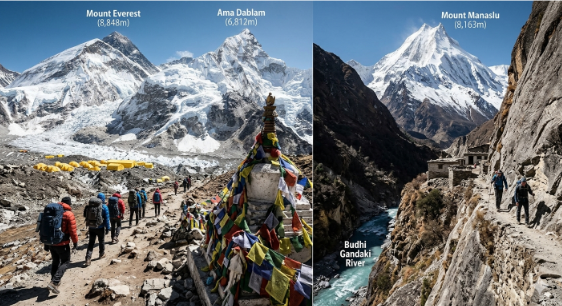
By 2026, the vibe in the Himalayas has changed. People aren’t just looking to tick a famous box anymore; they’re hunting for that gritty, unfiltered connection with the Khumbu. The feeling of the trek isn’t just about the scenery; it’s about that heavy, rhythmic thrum in your lungs as the oxygen starts to disappear. For anyone looking to truly test their mettle, the Everest Base Camp Trek is less of a hike and more of a total immersion—a slow crawl from the humid, rhododendron-heavy lowlands into a high-altitude world of ancient, wind-scoured ice. You’ll find yourself standing beneath the massive, intimidating walls of Nuptse and Lhotse, feeling incredibly small but entirely alive.
Walking the Sherpa Heartlands
It all kicks off with that famous, heart-in-your-throat flight into Lukla. From there, you’re dropped right into the rhythm of Sherpa life. You start in mossy, damp forests that smell like earth and pine, but then you round a ridge and the world just explodes into jagged granite and sky. The trail demands patience. The mountain doesn’t care about your gym stats; it forces you into a slow, rhythmic pace just to keep your lungs from burning. Staying in spots like Namche Bazaar is a reality check—it shows you a level of strength and quiet simplicity that you just can’t find in a guidebook.
The Art of Not Rushing (Acclimatization)
When you hit Dingboche at 4,410 meters, “climb high, sleep low” becomes your daily mantra. You don’t just sit around; you push up to spots like Nagarjun Hill, letting your body scream a little at the altitude before heading back down to rest. It’s tough on the legs, sure, but it’s the only real way to make sure you actually enjoy the Khumbu Glacier instead of just surviving it.
High Alpine Grit
Reaching the upper reaches of the Khumbu stays with you. There’s a specific kind of silence up there, broken only by the snap of prayer flags on a high ridge. It’s where raw geological power meets total stillness. Then comes the descent—and it’s a trip for the senses. As you head back down the valley, the air feels “heavy” and rich again, the temperature climbs, and that scorched, rocky moonscape slowly turns back into the vibrant, deep-green forests you sweated through a week earlier.
Life on the Edge
What sticks with you isn’t just the peaks; it’s the people. Seeing a porter haul a massive load up a vertical switchback with a genuine smile will completely recalibrate what you think “hard work” looks like. There’s a beautiful lack of friction here—Buddhist shrines and jagged rocks living together like it’s the most natural thing in the world. It’s a massive wake-up call on how to build a life in a place that feels like it’s constantly trying to freeze you out.
Why You Shouldn’t Wing It
Being blunt: trying to DIY a trip with this many moving parts is asking for trouble. Between navigating shifting permit rules and staying safe when a Himalayan storm rolls in out of nowhere, you need a real support system. It’s the difference between a miserable slog and the trip of a lifetime. Most people lean on experts because they offer that mix of local grit and the kind of backup that makes you feel like an actual human, not just another permit number on the trail.
The Business of the Mountains
Trusting your life to a team at 5,000 meters is the biggest call you’ll make. This is especially true if you’re looking at more technical routes, where the Manaslu Circuit Trek Cost can swing wildly depending on how you handle the logistics. A solid agency gives you a guide who is one part navigator, one part historian, and one part friend. They see the exhaustion in your eyes before you even feel it, which lets you stop worrying about the “how” and start looking at the horizon.
The Walk Home
By the time you’re back in the bamboo thickets of the lower valley, you’ve changed. Whether you’re staring into a bowl of garlic soup or just walking in the quiet, that mountain air has a way of clearing the mental junk. You stop checking your fitness tracker and start holding onto the memories of the moments that actually challenged you. That’s the stuff you’ll still be talking about years from now.
Carrying the Experience Forward
These memories will endure long after your trek is complete, allowing you to hold on to them as you move through life from mountains to people and everything that came before you on your trip. For many travellers, their experiences create a deeper appreciation for nature, leading to a future desire to continue exploring the beautiful Himilayas.
While preparing for your next trip, consider the best time for Everest Base Camp Trek; understanding that information will assist you in maximising the benefits of your time spent in this remarkable location! Choosing an appropriate season enables you to enjoy better weather, clearer views of the surrounding mountains and improved overall conditions while hiking in one of the world’s most well-known locations. As always with incredible experiences found throughout the Himalaya, the greatest rewards come through the experience beyond just what happens on the path; they will be with you for a lifetime!
FAQ
- Is Everest actually harder than Langtang?
Yeah, usually. The sustained time at extreme altitude and those brutal final pushes to the base camp make it a different beast entirely.
- What’s the bed situation?
It’s a mix. You get cozy, almost boutique lodges in Namche, but the higher you go, the more you should expect thin plywood walls and basic communal dining focused on heat and calories.
- What makes Manaslu different?
It’s way more tucked away. You’re dealing with restricted area permits and a mandatory licensed guide, which keeps the crowds down but the planning high.