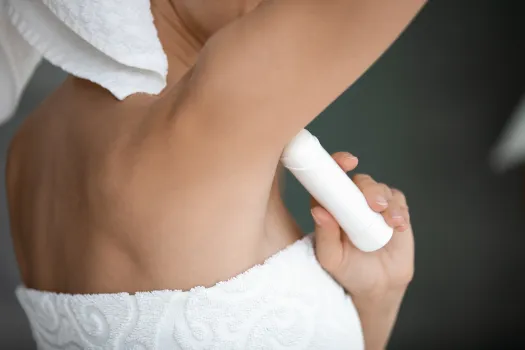
In the hierarchy of personal care attention, deodorant sits somewhere near the bottom. Skincare routines are researched and refined. Hair care products are selected with deliberate consideration of ingredients and compatibility. Fragrance is chosen with care, often tried across multiple sessions before a commitment is made. And yet the deodorant — applied directly to one of the body’s most sensitive and absorptive areas, used every single day without exception — is selected with less thought than almost any other product in the bathroom cabinet.
Dermatologists, grooming specialists, and personal care researchers have been pointing to this inconsistency for years. The deodorant, they note consistently, is the grooming step that most people get wrong — not through negligence, but through a combination of habit, misinformation, and a fundamental underestimation of how much this single product affects both skin health and daily confidence. The gap between how deodorant is typically chosen and how it should be chosen is wider than most people realize, and the consequences of that gap are more significant than is commonly acknowledged.
The Most Common Mistakes Being Made — and Why They Matter
The errors most frequently identified by experts in relation to deodorant use fall into several distinct categories. The first and most pervasive is the failure to distinguish between deodorant and antiperspirant — two product types that are often used interchangeably in conversation but that function through entirely different mechanisms and carry different implications for skin health.
A deodorant works by neutralizing or inhibiting the odor-causing bacteria that thrive in the warm, moist underarm environment. An antiperspirant, by contrast, uses aluminum-based compounds to physically obstruct the sweat glands, reducing the volume of perspiration that reaches the skin’s surface. Both are widely available, often combined in a single product, and frequently misrepresented as equivalent solutions to the same problem. They are not. Understanding the distinction is considered by dermatologists to be the foundational step in making a more informed deodorant choice — and it is a step that the majority of consumers are currently skipping.
The second common error is the selection of a product based on fragrance alone. Scent is the most immediately perceptible quality of a deodorant and therefore the one most heavily weighted in purchasing decisions. What it does not reveal is the formulation’s compatibility with the individual’s skin type, its efficacy across varying conditions, or the safety profile of the synthetic compounds used to create and stabilize that fragrance. A product that smells appealing in a thirty-second application test may prove deeply problematic when applied daily to sensitive underarm skin over an extended period.
Incorrect application is the third area consistently highlighted by grooming experts. Deodorant is most effective when applied to clean, completely dry skin — ideally following a shower, with sufficient time allowed for the product to fully absorb before clothing is put on. Application to damp skin reduces the product’s adhesion, dilutes its active ingredients, and contributes to the fabric transfer and staining that many users attribute to the product itself rather than to the manner of its application. Nighttime application, endorsed by a growing number of dermatologists as a strategy for enhanced protection, is practiced by very few despite its documented benefits.
Why Skin Type Is Being Ignored in Deodorant Selection
One of the most consistent oversights identified in deodorant selection is the failure to account for individual skin type — a consideration that is considered fundamental in every other area of skincare but that is almost entirely absent from the way most people approach their deodorant choice.
Sensitive skin, which is prone to irritation, redness, and adverse reactions to synthetic compounds, requires formulations that are free from alcohol, synthetic fragrances, and high concentrations of baking soda — all of which are common in conventional deodorant products and all of which are known irritants for reactive skin types. Normal to dry skin benefits from formulations that incorporate moisturizing agents alongside odor-control ingredients. Oily or combination skin types may respond better to powder-based or gel formulations that help manage moisture without adding additional hydration to an already active sebaceous environment.
The absence of skin type consideration in deodorant selection is particularly notable given how consistently it is applied elsewhere. A person who carefully selects a gentle, fragrance-free cleanser for sensitive facial skin may simultaneously be applying a heavily fragranced, alcohol-containing deodorant to underarm skin that is equally reactive — and attributing the resulting irritation to shaving or clothing rather than to the product itself.
Deo for Men: The Errors Most Commonly Made in This Segment
Within the deo for men category, the errors identified by grooming and dermatology specialists tend to cluster around a specific set of behaviors. The most prevalent is the reliance on maximum-strength antiperspirant formulations as the default choice — selected not on the basis of genuine need or skin compatibility, but on the assumption that stronger is always better.
For many users of deo for men products, the strength of the aluminum-based formulation being used is in excess of what their skin and lifestyle actually require. The consequence is unnecessary chemical exposure, increased likelihood of skin irritation and darkening, and a disruption of the underarm microbiome that can, over time, contribute to the very odor problems the product is intended to solve. A recalibration toward formulations that are matched to actual activity levels and skin type — rather than selected for their maximum-strength marketing positioning — is a change that dermatologists consistently recommend within the deo for men segment.
The failure to replace deo for men products at appropriate intervals is another commonly noted issue. Like all personal care products, deodorants have a functional shelf life — one that is frequently exceeded before the product is discarded, particularly when a large or value-sized format is purchased. A product that has been open and in use for an extended period may have degraded in efficacy, developed contamination through repeated contact with applicator surfaces, or shifted in formulation stability in ways that affect both performance and skin compatibility.
Deo for Women: Where the Mistakes Carry Particular Consequence
The errors made in deodorant selection and use within the deo for women category carry particular significance given the physiological characteristics of the underarm skin in this group. More frequent hair removal, greater sensitivity to synthetic fragrance compounds, and the hormonal variability that influences sweat composition across different life stages all contribute to a context in which poor deodorant choices have more immediate and more visible consequences.
The selection of deo for women products based on fragrance appeal rather than formulation suitability is identified as the primary error — one that results in widespread underarm irritation, contact dermatitis, and the skin darkening that is frequently and incorrectly assumed to be an inevitable consequence of hair removal rather than a response to incompatible product ingredients.
The use of conventional antiperspirant formulations on recently shaved or waxed skin is another error with clear dermatological consequences. The mechanical disruption of hair removal compromises the skin’s barrier function, making it significantly more permeable to the aluminum compounds, alcohols, and synthetic additives present in many standard deo for women products. Application of these formulations to compromised skin increases the risk of irritation, sensitivity, and adverse reaction — a risk that can be substantially reduced by switching to a gentler, skin-compatible formulation or by allowing adequate recovery time between hair removal and product application.
Hormonal awareness is also largely absent from the way deo for women products are selected and used. The significant shifts in sweat volume and composition that occur across the menstrual cycle, during pregnancy, and through menopause are not accounted for in the single-product approach that most users maintain throughout these varied biological phases. Dermatologists increasingly recommend that deo for women selections be reviewed during periods of significant hormonal change — and that formulations be chosen for their adaptability and gentleness rather than for their raw strength.
What Getting It Right Actually Looks Like
Correcting the most common deodorant mistakes does not require a complex overhaul of the grooming routine. It requires, primarily, a shift in the framework through which deodorant selection is approached — from habit and convenience to informed consideration of skin type, formulation ingredients, application practices, and the genuine demands of individual lifestyle and biology.
A product that is matched to skin type, free from known irritants, applied correctly to clean and dry skin, and replaced at appropriate intervals will consistently outperform one selected on the basis of brand familiarity or fragrance appeal — regardless of how highly marketed the latter may be. This principle applies equally across the deo for men and deo for women categories, and its adoption requires nothing more than the willingness to apply to deodorant selection the same level of consideration that is already being applied to almost every other aspect of a personal care routine.
The experts are consistent on this point. The deodorant is the grooming step most people get wrong. It is also, for that reason, the one where the greatest improvement is available — and where the effort required to achieve that improvement is, relative to the benefit gained, remarkably small.