For many growing businesses, finding products is no longer difficult.
A quick search across online marketplaces can reveal hundreds of suppliers, manufacturers, and wholesalers offering similar products at different prices.
The difficult part begins after the search.
Which supplier is reliable? Is the quotation really comparable? Will the finished product match the sample? How should quality be checked? And what happens when several suppliers need to ship products at the same time?
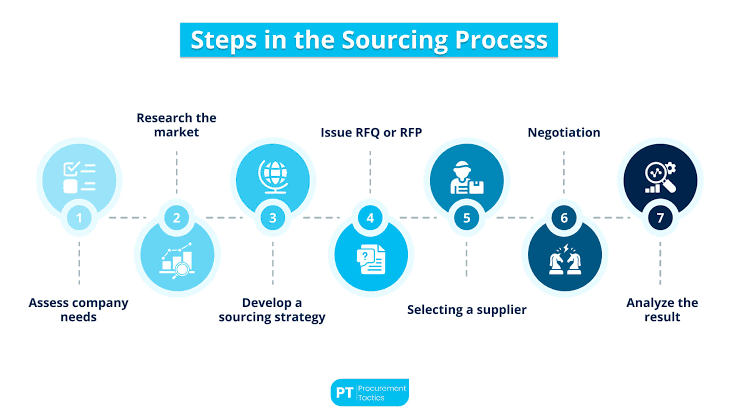
This is why product sourcing should be treated as a process rather than a single purchasing decision.
A structured sourcing system can help businesses reduce mistakes, control costs, and build a more reliable supply chain.
Start With a Clear Product Specification
Supplier problems often begin with unclear requirements.
A buyer may request a quotation for a product without specifying the exact material, size, packaging, color, or quantity.
The supplier then makes assumptions.
Those assumptions may produce a quotation that looks attractive but is based on specifications different from what the buyer actually needs.
Before contacting suppliers, businesses should prepare a simple product specification.
Depending on the product, this may include:
- Product dimensions
- Materials
- Colors
- Functions
- Order quantity
- Packaging
- Branding requirements
- Target market
- Required certifications
- Expected delivery schedule
For custom products, drawings, photos, reference samples, or technical files can make communication much clearer.
The goal is simple: every supplier should quote for the same product.
Supplier Search Is Only the First Step
Platforms such as Alibaba and 1688 have made China sourcing more accessible to overseas businesses.
However, discovering a supplier does not automatically mean that supplier is suitable.
A business should look beyond the product listing.
Important questions include:
- Does the supplier specialize in this product category?
- Is it a manufacturer, trading company, or wholesaler?
- What is the minimum order quantity?
- Can it support customization?
- How long does production normally take?
- What quality control processes are used?
- Can the supplier provide samples?
- How quickly does the team respond to questions?
For products that require OEM or private label production, manufacturing experience becomes particularly important.
A supplier that handles simple wholesale orders well may not necessarily be suitable for a customized product requiring several rounds of development.
The Lowest Quotation May Not Be the Lowest Cost
Price comparison is necessary, but it can also be misleading.
Imagine three suppliers quoting the same product.
Supplier A offers the lowest unit price but requires a large MOQ.
Supplier B charges slightly more but includes better packaging.
Supplier C has the highest unit price but provides a shorter production time and better customization.
Looking only at the factory price would make Supplier A appear to be the obvious choice.
But that does not account for inventory risk, packaging, defect rates, production delays, or additional handling.
A better sourcing decision considers the total cost of doing business with a supplier.
That includes both visible costs and operational risks.
Samples Should Answer Questions
Ordering a sample is not simply about confirming that the product exists.
A sample should answer specific questions before a bulk order is placed.
For example:
Does the material feel correct?
Are the dimensions accurate?
Does the product function as expected?
Is the color consistent with the requirement?
Does the packaging protect the product properly?
Is the logo positioned correctly?
For customized products, the first sample may not be the final sample.
Changes may be required to materials, printing, packaging, construction, or dimensions.
Each revision should be documented.
Once the final sample is approved, it becomes an important reference for mass production and later quality inspection.
MOQ Needs to Match the Business Stage
Minimum order quantity can have a major impact on cash flow.
Factories often offer lower prices for higher quantities because larger production runs reduce the cost per unit.
That can make a large order look attractive.
But a low unit price is not valuable if half the inventory remains unsold.
For a new product, businesses should consider whether a smaller initial order could provide more useful information.
A test order can reveal:
- Actual customer demand
- Popular colors or variations
- Return rates
- Product quality issues
- Suitable retail pricing
- Advertising performance
Once demand becomes more predictable, larger bulk orders may make more sense.
The best MOQ is not always the lowest quantity or the cheapest unit price. It is the quantity that fits the business’s current sales and cash-flow situation.
Quality Control Should Be Defined Before Production
Many buyers think about inspection only after production has finished.
That is often too late.
Quality expectations should be established before the order is placed.
Businesses should define what needs to be checked and what would be considered unacceptable.
Depending on the product, an inspection may cover:
- Quantity
- Dimensions
- Material
- Color
- Surface appearance
- Product function
- Logo and printing
- Accessories
- Labels
- Barcodes
- Packaging
- Carton condition
Different product categories require different checks.
Electronics may require functional testing.
Clothing may require measurement and stitching checks.
Home products may require surface, assembly, or packaging inspection.
The more specific the requirements are, the easier it becomes to identify problems before shipment.
Communication Needs a System
Supplier communication often begins informally.
A few messages are exchanged, samples are ordered, and prices are discussed.
That may work for one product.
It becomes much harder when a business manages ten products across several suppliers.
Important information should therefore be documented.
Businesses can maintain records for:
- Supplier quotations
- Product specifications
- Sample revisions
- Approved samples
- Purchase orders
- Payment records
- Production schedules
- Inspection reports
- Shipping information
This becomes especially valuable when placing repeat orders.
Instead of starting from the beginning, the business already has a clear record of what was previously approved.
Multiple Suppliers Create a Logistics Challenge
Growing businesses frequently source products from more than one supplier.
A retailer might purchase its main product from one factory, packaging from another supplier, and accessories from a third.
If every supplier ships internationally separately, costs and coordination can become difficult to manage.
One solution is order consolidation.
Products can first be delivered domestically to one warehouse, where they can be received, counted, inspected, repacked when necessary, and combined for international shipping.
Consolidation can be especially useful for:
- E-commerce sellers
- Wholesale buyers
- Multi-product retailers
- Amazon sellers
- Private label brands
- Businesses buying from 1688 or several Chinese suppliers
It can also make it easier to identify missing goods before the products leave the sourcing country.
Calculate Landed Cost Before Confirming the Order
One of the biggest sourcing mistakes is calculating profit using only the supplier’s product price.
The real cost of an imported product is usually higher.
A landed cost calculation may include:
- Product cost
- Domestic freight
- Sample costs
- Custom packaging
- Quality inspection
- Warehousing
- International freight
- Insurance
- Import duties
- Customs fees
- Final delivery
For some products, international logistics can significantly change the economics of the order.
Large but low-value products are a good example.
The factory price may appear attractive, but their size can create high shipping costs.
This is why landed cost should ideally be estimated before placing a large purchase order.
Production Time Needs a Buffer
A supplier may provide a production lead time of 20 days.
That does not necessarily mean the products will reach the buyer in 20 days.
The full timeline can include:
- Deposit payment
- Material preparation
- Production
- Quality inspection
- Rework if required
- Warehouse handling
- Export preparation
- International transportation
- Customs clearance
- Final delivery
Seasonal factors can also affect production.
Major holidays, peak shipping periods, material shortages, and factory capacity can extend timelines.
Businesses launching seasonal products should therefore work backward from the required delivery date rather than focusing only on the factory production time.
Reliable Suppliers Become More Valuable Over Time
Sourcing does not end when the first order arrives successfully.
Over time, businesses begin collecting valuable information about each supplier.
Which suppliers respond quickly?
Which maintain consistent quality?
Which meet production schedules?
Which handle problems professionally?
Which are flexible with repeat orders?
This information helps businesses build a stronger supplier base.
Reliable supplier relationships can also make future product development easier because both sides understand the expectations and working process.
However, long-term relationships should still be supported by clear specifications, inspections, and purchasing records.
Trust and process should work together.
Build a Repeatable Sourcing Workflow
A growing business should eventually be able to manage sourcing through a consistent workflow.
A simple framework might look like this:
- Define the product
Prepare specifications, quantities, packaging, and target requirements.
- Search for suppliers
Compare factories, manufacturers, wholesalers, and sourcing options.
- Request quotations
Make sure suppliers are quoting against the same specifications.
- Order samples
Evaluate quality and make necessary revisions.
- Confirm commercial terms
Agree on price, MOQ, payment terms, packaging, and production time.
- Place the order
Document the final specifications clearly.
- Monitor production
Maintain communication and confirm important milestones.
- Inspect the products
Check finished goods against agreed requirements.
- Consolidate when necessary
Combine multiple supplier orders before international shipping.
- Arrange logistics
Choose a shipping method based on cost, time, product type, and destination.
- Record the results
Save supplier performance and product information for future orders.
A repeatable workflow reduces dependence on memory and makes the sourcing operation easier to scale.
Final Thoughts
Global sourcing gives businesses access to an enormous range of products, suppliers, factories, and manufacturing capabilities.
But access alone does not create a reliable supply chain.
Successful sourcing depends on what happens between discovering a product and receiving the final shipment.
Clear specifications, supplier comparison, samples, reasonable MOQs, quality control, consolidation, landed-cost calculations, and organized communication all play a role.
For growing businesses, the goal should not simply be to find the cheapest supplier.
The goal is to build a sourcing process that produces predictable results.
When the process becomes repeatable, businesses can spend less time solving avoidable purchasing problems and more time developing products, serving customers, and growing the business.