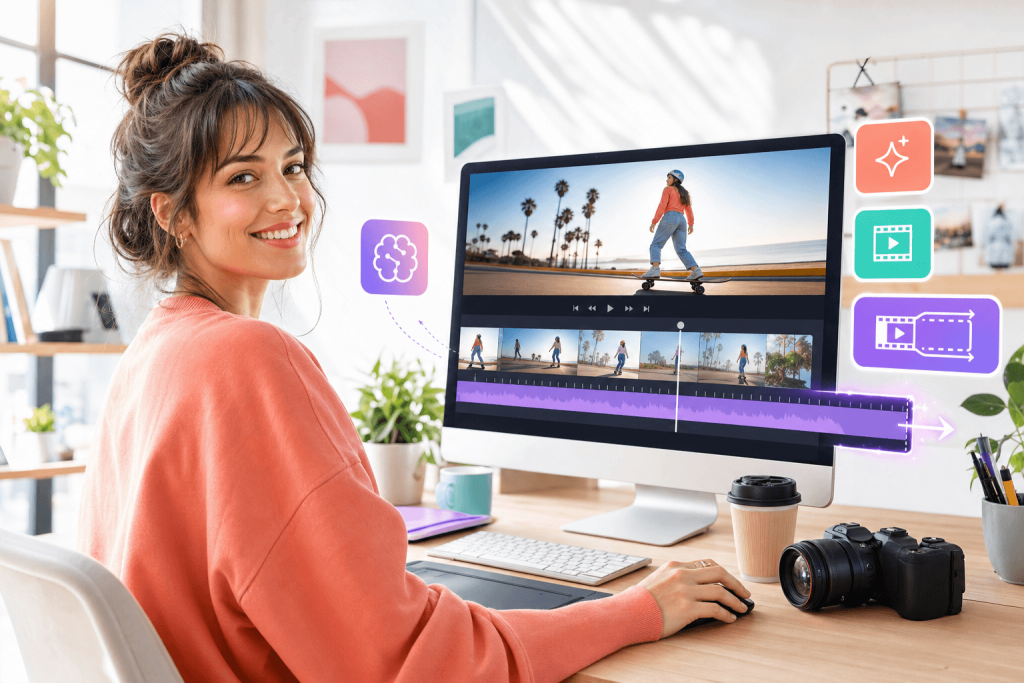
For online stores, video has quietly become the difference between a scroll and a sale. Shoppers want to see a product move, rotate, and live in a real setting before they trust their cart. The problem has always been cost and speed — studio shoots are slow, and most catalogues are too large to film. This is exactly where Seedance 2.5 is changing the conversation, giving e-commerce teams a way to turn a single product photo into polished, on-brand motion in minutes.
Why Seedance 2.5 matters for e-commerce
Seedance 2.5 is the next-generation evolution of ByteDance’s Seedance video models, built on the multimodal foundation of Seedance 2.0. Where earlier AI video tools produced short, generic clips, this workflow is designed around the things online sellers actually need: consistent products across shots, controllable camera movement, and short-form outputs sized for every channel. Instead of describing a vague scene, you can upload a product still and direct how it should move, be lit, and be framed.
That shift is significant. A typical store doesn’t need cinematic blockbusters — it needs dozens of clean, repeatable clips: a hero product reveal, a 9:16 clip for Reels, a square version for the feed, and a wide banner for the homepage. A reliable video model lets a small team produce all of those from the same source image without re-shooting anything.
From product stills to motion
The most practical feature for retailers is image-to-video. You start with assets you already own — packshots, lifestyle photos, packaging renders — and animate them with a prompt. You might write: “slow dolly push toward the sneaker on a marble surface, soft morning light, subtle dust particles, 4 seconds.” The model keeps the product identity intact while adding the motion and atmosphere that make a clip feel premium.
Because the workflow supports reference images, your brand colours, textures, and composition carry through consistently. That consistency is the single biggest reason e-commerce teams struggle with generic AI tools, and it’s where this approach earns its place in a real production pipeline. If you want to test this directly, you can experiment inside the built-in AI video generator and compare a few directions before committing.
Faster ad creative, more variants to test
Performance marketing runs on volume and testing. The brands that win on TikTok, Instagram, and Meta ads are usually the ones producing the most variants and letting the data decide. Seedance 2.5-style workflows are built for exactly this rhythm:
- Multiple hooks, one afternoon. Generate five openings for the same product and run them as separate ad creatives.
- Channel-native formats. Export 16:9, 9:16, 1:1, and 4:5 from the same prompt so each placement looks intentional.
- Built-in audio. Native sound effects and music-led timing mean fewer trips to a separate editor before a clip is publish-ready. For a lean team, that’s the gap between shipping two ads a week and shipping twenty. More variants tested usually means a lower cost-per-acquisition over time.
Product storytelling that converts
Beyond ads, video reshapes the product page itself. A short clip that shows scale, texture, and use-in-context answers the silent questions that text bullets never quite cover. Does the bag actually fit a laptop? How does the fabric drape? What does the gadget look like in a real kitchen? A few seconds of motion can do what a paragraph cannot.
This is where Seedance 2.5 fits naturally into the buyer journey. Use it to create:
- Hero reveals at the top of a product page to set the mood.
- Detail loops that highlight stitching, finish, or a key feature.
- Lifestyle scenes that place the product in the customer’s world.
- Comparison or “how-to-use” clips that reduce returns by setting expectations. Each of these can be generated from existing photography, which means even stores with thousands of SKUs can roll out video gradually without a single new photoshoot.
Keeping it on-brand and consistent
The risk with any AI tool is output that looks “AI.” The defence is direction. Treat each generation like a creative brief: name the subject, the action, the camera move, the lighting, and the mood, and state clearly what must stay the same. Reference images do the heavy lifting on consistency, while concrete camera language — “tracking shot,” “rack focus,” “close-up” — keeps the result looking deliberate rather than random.
Start small. Run short, low-resolution tests to lock the composition and motion, then scale up the duration and quality only once the look is right. This saves credits and produces a far more usable library of clips.
A practical note on availability
It’s worth being clear-eyed: Seedance 2.5 is positioned as the upgrade path that creators are actively tracking, and many of its headline improvements — sharper detail, longer scenes, stronger multi-shot consistency — build directly on the current Seedance 2.0 workflow. The practical takeaway for store owners is that you don’t need to wait. The reference-driven, image-to-video approach is available to explore today, and the workflow you learn now carries straight into the next model generation.
The bottom line
E-commerce has always rewarded the brands that show, not just tell. Seedance 2.5 lowers the cost of showing to almost nothing — turning the product photos you already have into motion that earns attention and trust. For teams under pressure to produce more creative, faster, and on smaller budgets, that’s not a marginal improvement. It’s a genuinely different way to merchandise online. The stores that adopt this workflow early will build a video library their competitors can’t match — and in a feed where motion wins, that advantage compounds with every clip.