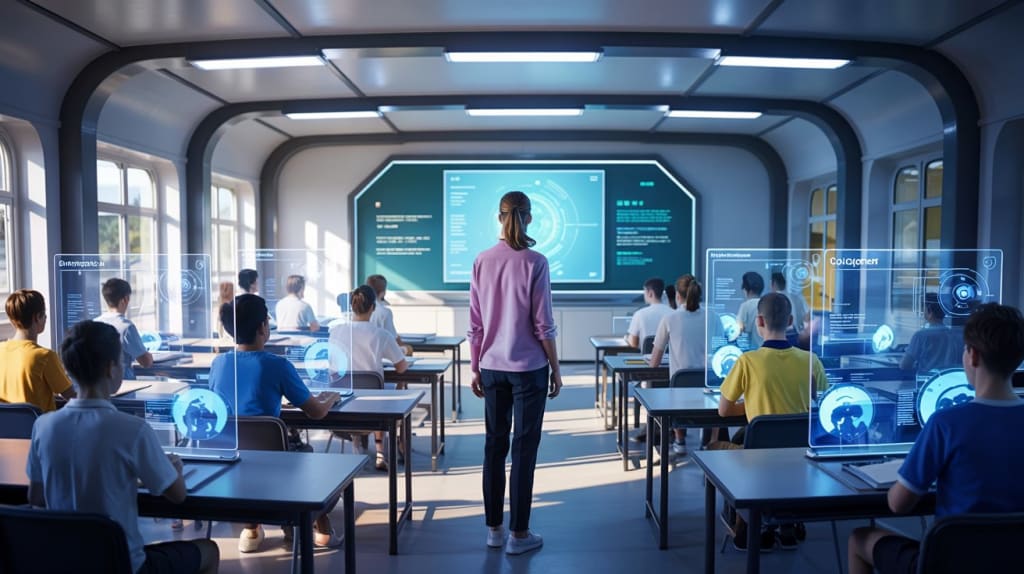
Artificial intelligence is no longer limited to research labs, software companies, or futuristic discussions. It is now becoming part of everyday communication, education, administration, business, and public awareness. Among the many branches of AI, video generation is one of the most visible and practical developments because video is already the preferred format for learning, storytelling, marketing, and public engagement.
From students preparing for competitive exams to educators, public institutions, local businesses, and digital creators, AI video tools are opening new possibilities. They can help explain complex topics, simplify policy communication, create multilingual learning material, and support more engaging online campaigns.
In a country like India, where information must reach people across languages, regions, literacy levels, and social backgrounds, the ability to turn ideas into clear visual content can be extremely powerful.
Why Video Matters More Than Ever
People often understand information faster when it is presented visually. A long article, policy document, or lecture note may contain important knowledge, but not everyone has the time or patience to read it carefully. Video can combine text, voice, visuals, examples, and emotion in one format.
This is especially useful for topics such as:
- Government schemes
- Exam preparation
- Public health awareness
- Financial literacy
- Environmental campaigns
- Career guidance
- Civic education
- Technology explainers
- Social awareness messages
For example, a student preparing for UPSC may read about climate change policies, but a short animated explainer can make the same topic easier to remember. A citizen may ignore a long government notice, but a simple video in their local language can explain the key message quickly. A teacher may struggle to explain a complex economic concept, while a visual story can make it easier for students to understand.
This is why video has become central to modern communication.
The Traditional Challenge of Creating Good Videos
Until recently, producing high-quality videos required significant effort. A creator needed a script, camera, lighting, editing software, voiceover, graphics, music, and time. For institutions or businesses, it often required a professional production team. For individual educators or students, the process could feel too difficult.
Even when the idea was simple, production became the biggest barrier.
Consider a teacher who wants to create ten short videos about Indian polity, geography, economics, and environment. Writing the content is only one part of the job. Recording, editing, adding visuals, and exporting the video may take many hours. If the teacher wants the same content in Hindi, English, and a regional language, the workload becomes even larger.
This is the gap AI video generation is beginning to address.
How AI Video Generation Works in Simple Terms
AI video generation allows users to create videos from text prompts, images, scripts, or references. Instead of manually filming every scene, the user describes what they want. The AI system then helps generate moving visuals, transitions, characters, backgrounds, or complete short clips.
A user might type:
“Create a short educational video explaining how rainwater harvesting helps Indian cities manage water scarcity.”
The AI tool can then help create visuals showing rainfall, rooftops, water tanks, urban areas, and simple explanatory scenes. The creator can refine the result by adjusting tone, style, duration, and details.
Modern tools such as Gemini Omni are part of this new wave of AI-powered video creation, making it easier for users to turn ideas into visual content without needing a full production setup.
Use Case 1: Better Learning Material for Students
Students preparing for competitive exams deal with large amounts of information. Subjects like history, polity, economy, geography, science, environment, ethics, and current affairs require both understanding and retention.
AI video can help convert static study material into visual learning content.
For example:
- A timeline video can explain major events of modern Indian history.
- A map-based video can show river systems, monsoon patterns, or border regions.
- A simple animation can explain inflation, fiscal deficit, or monetary policy.
- A case-study video can make ethics examples more relatable.
- A short explainer can summarise a government scheme in two minutes.
This does not mean AI video should replace books or serious study. Rather, it can support revision, memory, and conceptual clarity. Many students learn better when they see information visually before reading deeper material.
For UPSC aspirants, especially beginners, such videos can reduce the fear of complex subjects. They can make difficult topics approachable and help students build interest before moving into detailed study.
Use Case 2: Support for Teachers and Educators
Teachers often know their subjects well but may not have the time or technical skills to create polished digital content. AI video tools can reduce this burden.
An educator can prepare a script and use AI to create supporting visuals. Instead of spending hours designing slides or editing clips, the teacher can focus more on accuracy, clarity, and explanation.
AI video can be especially useful for:
- Online course introductions
- Topic summaries
- Revision videos
- Visual examples
- Explainer clips
- Social media educational posts
- Student engagement material
For small coaching institutes, this can be a major advantage. They may not have large media teams, but they can still create professional-looking content for students.
However, teachers must review AI-generated content carefully. AI can assist with presentation, but subject accuracy remains the responsibility of the educator.
Use Case 3: Public Policy and Governance Communication
Governance depends not only on making policies but also on communicating them clearly. A well-designed scheme may fail to reach people if citizens do not understand its benefits, eligibility, or application process.
AI-generated video can help government departments, NGOs, and civic organisations create simple explainers for public awareness.
For example, videos can explain:
- How to apply for a welfare scheme
- Why vaccination is important
- How to prepare for natural disasters
- How to use digital public services
- How to prevent cyber fraud
- Why waste segregation matters
- How local governance works
In a diverse country, the same message may need to be adapted for different languages and regions. AI tools can help create multiple versions faster. This can be valuable for awareness campaigns where speed and scale matter.
For instance, during a public health campaign, a department may need short videos in different languages for social media, WhatsApp circulation, local screens, or community outreach. AI-assisted production can make such campaigns more practical.
Use Case 4: Making Complex Issues Easier to Understand
Many important issues are difficult for the general public to understand because they involve data, policy, science, or economics. Climate change, inflation, artificial intelligence, cybersecurity, water management, urban planning, and international relations are all examples.
AI video can simplify these topics through storytelling.
Instead of presenting only numbers and reports, a video can show real-life situations. For example, a climate change video can show a farmer facing irregular rainfall, a city dealing with heatwaves, and a student learning about sustainable solutions. This makes the topic more human and easier to remember.
The same approach can be used for financial literacy. A video can show a young worker learning about savings, insurance, loans, and digital payments. This is more engaging than a plain text guide.
Use Case 5: Helping Small Businesses and Local Creators
AI video is not only useful for education and governance. It can also help small businesses, freelancers, and local creators communicate better.
A small business may need promotional videos but may not have the budget for professional production. AI video tools can help create product explainers, service introductions, festival campaigns, and social media reels.
For example:
- A local coaching centre can create a course introduction video.
- A bookstore can promote exam preparation material.
- A career counsellor can explain study paths.
- A local NGO can share impact stories.
- A small startup can create a product demo.
This makes digital communication more democratic. More people can participate in visual storytelling, even without advanced editing skills.
The Importance of Responsible AI Use
While AI video offers many benefits, it also brings responsibilities. Video is a powerful medium, and misleading videos can cause confusion or harm. Deepfakes, fake news, manipulated political content, and false educational claims are serious risks.
Users should follow some basic principles:
- Do not create misleading or fake identity-based videos.
- Clearly review facts before publishing.
- Avoid presenting AI-generated content as real footage when it is not.
- Respect copyright, privacy, and consent.
- Use AI to explain and educate, not to deceive.
- Add human review before publishing sensitive content.
For educational and public communication, accuracy is more important than visual appeal. A beautiful video with wrong information can do more harm than good.
AI Will Not Replace Human Judgment
One common fear is that AI will replace teachers, writers, editors, designers, or administrators. In reality, the best use of AI is as an assistant, not as a replacement for human judgment.
AI can generate visuals, suggest structure, and speed up production. But humans still decide the message, purpose, accuracy, ethics, and emotional tone.
A teacher understands student confusion better than an algorithm. A civil servant understands local administrative challenges better than a generic AI model. A journalist understands public interest and accountability. A creator understands audience trust.
AI video works best when human expertise guides it.
Future Possibilities
In the coming years, AI video generation may become even more useful. We may see tools that can create longer educational modules, support more Indian languages, generate better diagrams, match regional cultural contexts, and integrate with learning platforms.
For students, this may mean more personalised learning. For teachers, it may mean faster content preparation. For government communication, it may mean clearer public awareness campaigns. For creators, it may mean more freedom to experiment with ideas.
The most exciting possibility is not simply faster video production. It is the ability to make knowledge more accessible.
Conclusion
AI video generation is changing how people create and consume information. It can support education, public communication, governance, business, and digital storytelling. For a country with diverse audiences and complex information needs, this technology has practical value.
However, the real impact will depend on how responsibly it is used. AI-generated videos should be accurate, ethical, and meaningful. They should help people understand important topics, not mislead them.
The future of communication will not be only text-based or video-based. It will be a combination of human knowledge, digital tools, visual storytelling, and responsible creativity. AI video generation is becoming an important part of that future.